
DEVELOPING A DIGITAL BUSINESS CARD PLATFORM
About Client
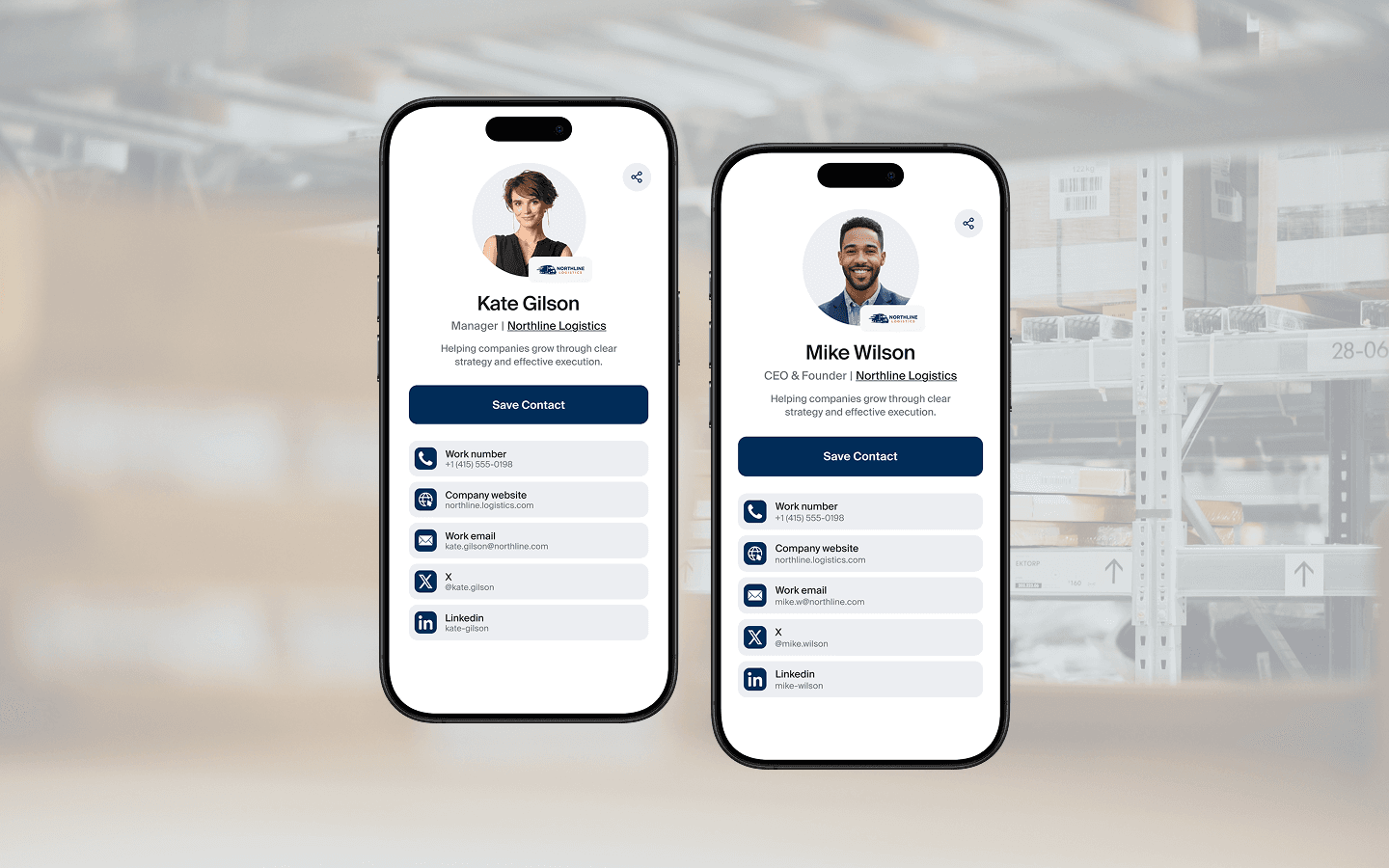
DBC is a fully digital business card platform that helps professionals and teams share their contact information instantly and memorably. It replaces traditional paper cards with customizable, interactive designs accessible anytime, anywhere.
Main Goal
Build a scalable SaaS platform that includes a mobile app, a marketing website, and a B2B solution for teams and organizations.
Enable professionals and companies to manage, share, and track their business contacts digitally, replacing outdated paper cards with a measurable, modern solution.
Replace scattered paper cards, ad-hoc email signatures and random QR codes with one coherent system that captures leads, keeps branding under control, and plugs into existing CRMs.
Project Requirements
Business
The product must replace paper business cards with a coherent digital identity system.
The system must support B2B companies with sales-driven and event-driven workflows, focusing on lead generation and attribution.
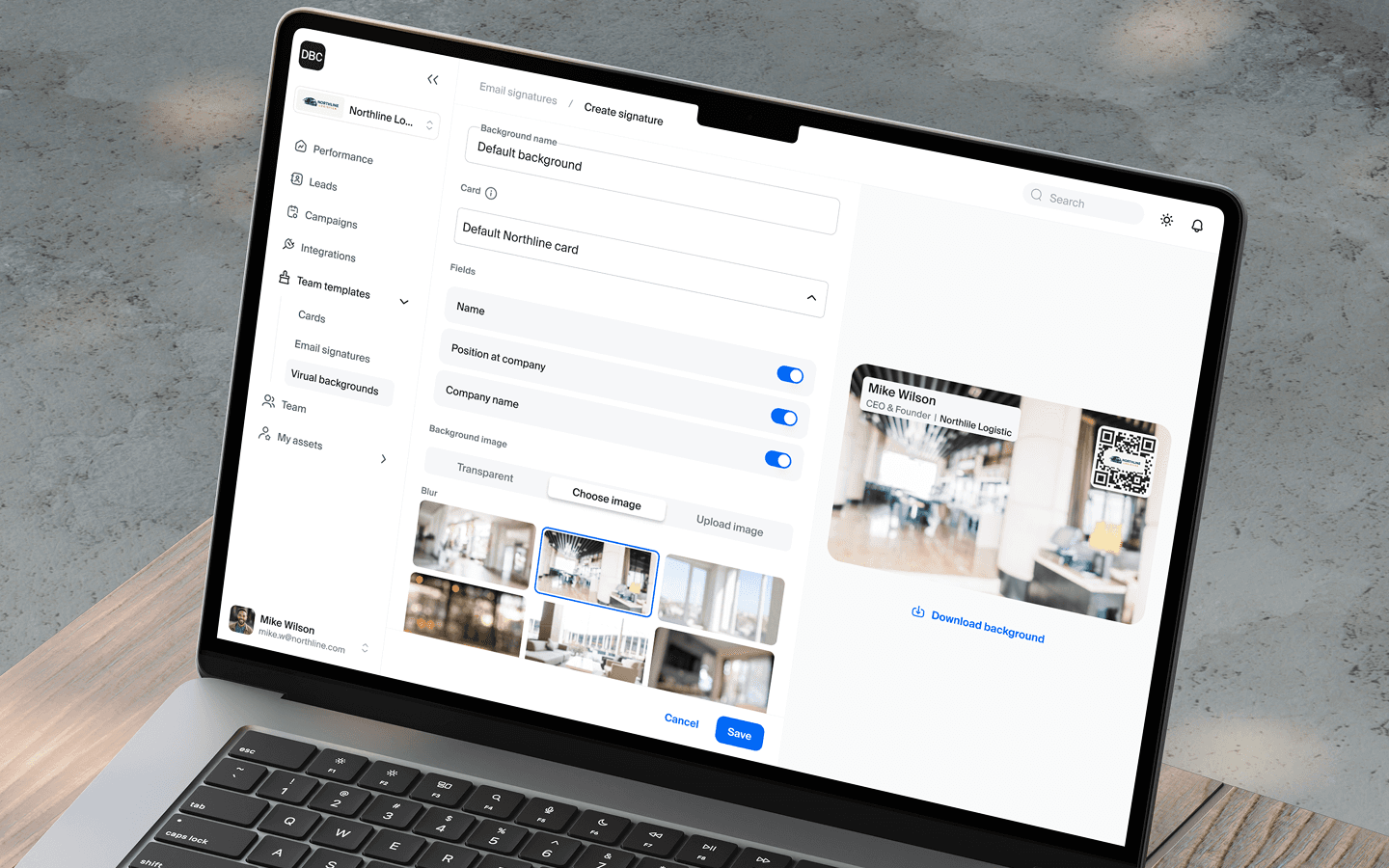
The platform must enforce brand consistency across all employee-facing assets (cards, signatures, virtual backgrounds).
Analytics must demonstrate clear business value, showing how networking activity translates into measurable pipeline impact.
User Experience
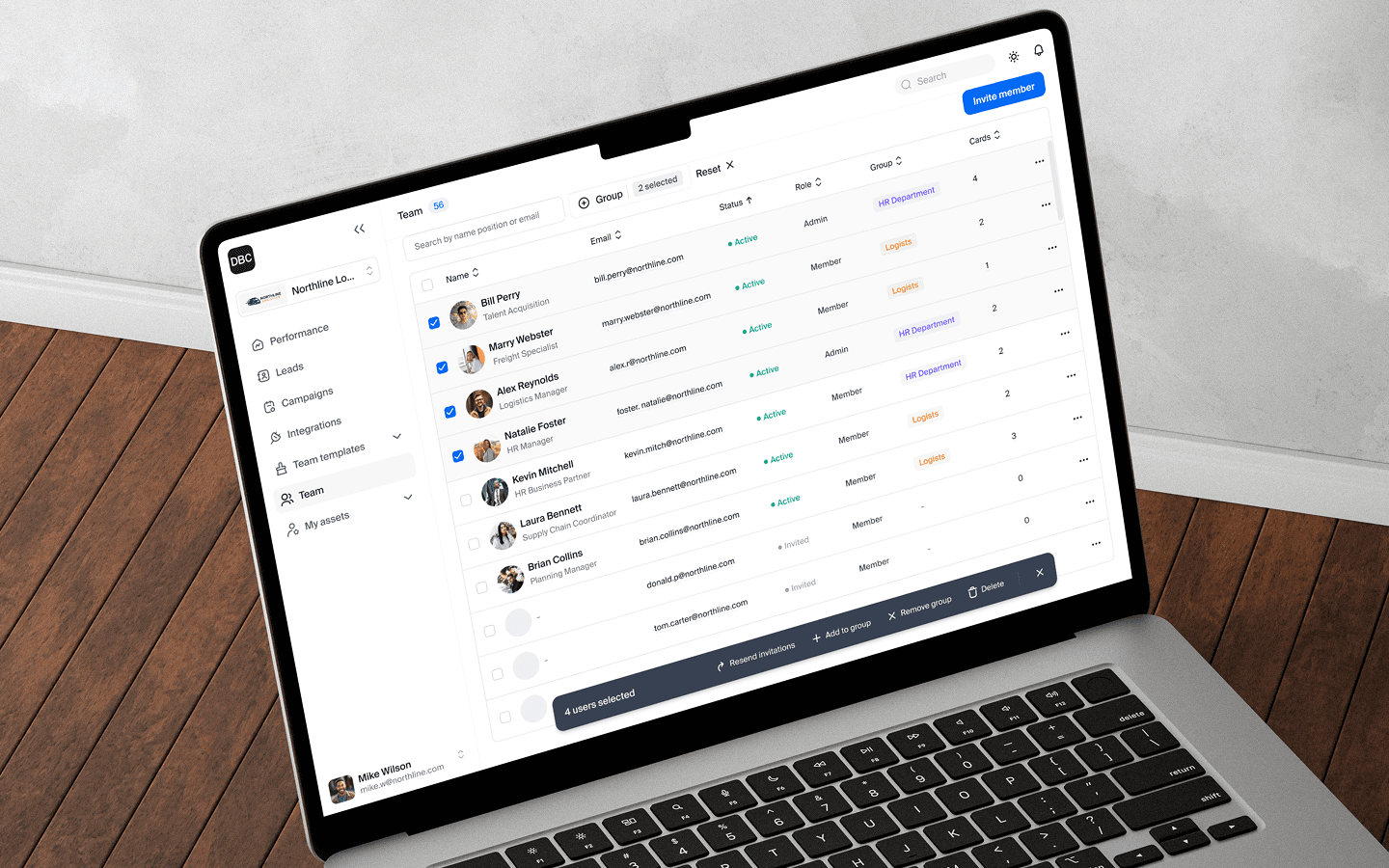
Tables, filters, and bulk actions must follow familiar enterprise UX patterns to minimize learning time.
Key performance metrics (KPIs) must be immediately visible at the top level, with the ability to drill down into details.
Empty states must be educational, guiding first-time users toward next steps without documentation.
Users must clearly understand what data is captured, where it goes, and how it's used.
User Interface
Client branding must be able to stand out within the product UI, especially in cards and shared assets.
Tables and dashboards must be highly scannable, supporting fast decision-making.
Components used across leads, teams, and assets must share a consistent visual language.
Technology
The system must support custom components layered on top of the base library for advanced enterprise needs.
The frontend must be built on a component-based architecture to ensure scalability and consistency.
Analytics dashboards must aggregate data across users, groups, campaigns, and locations.
Role-based access control must distinguish between regular users, managers, and admins.

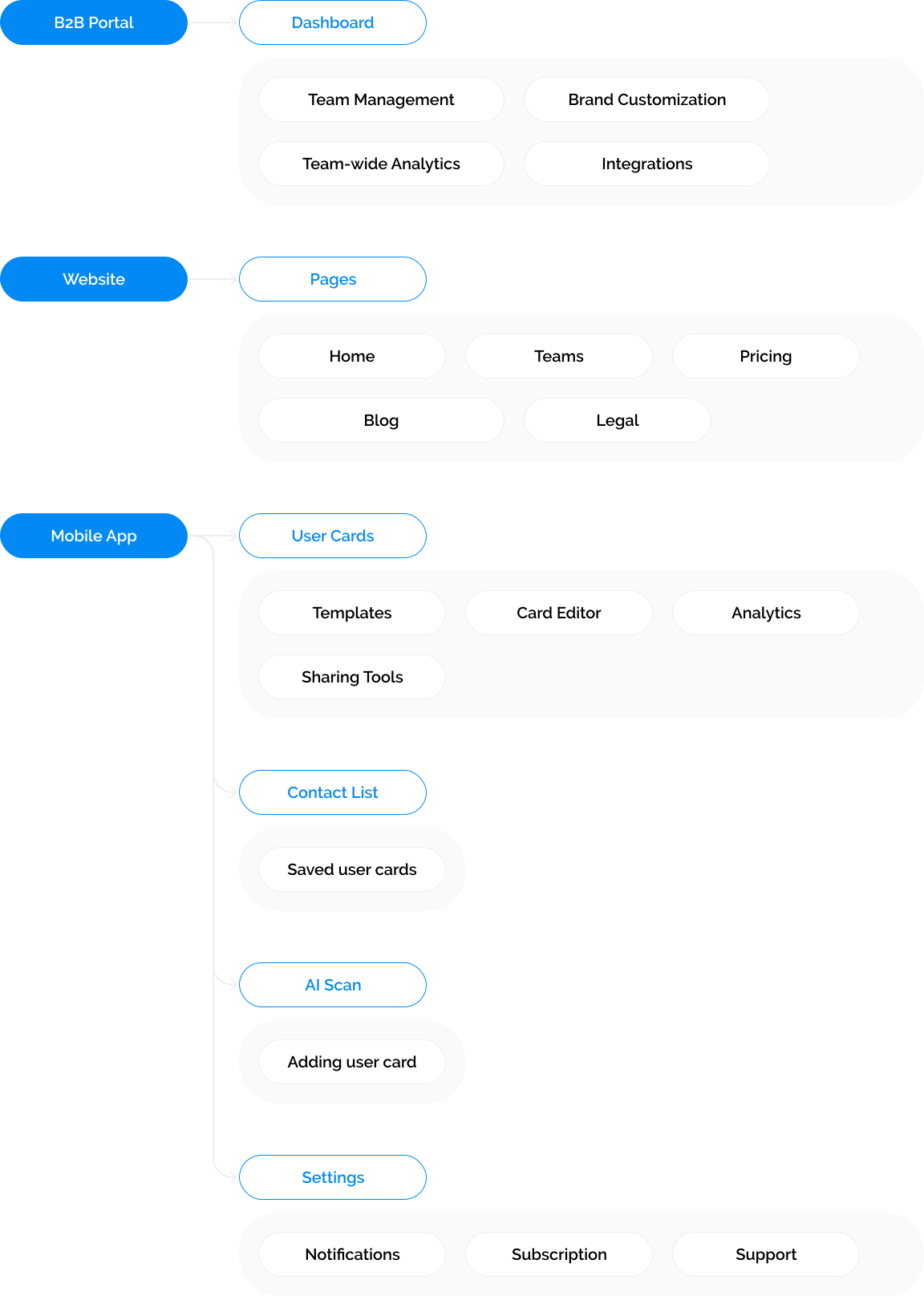
Project Structure
Our Solutions
Business
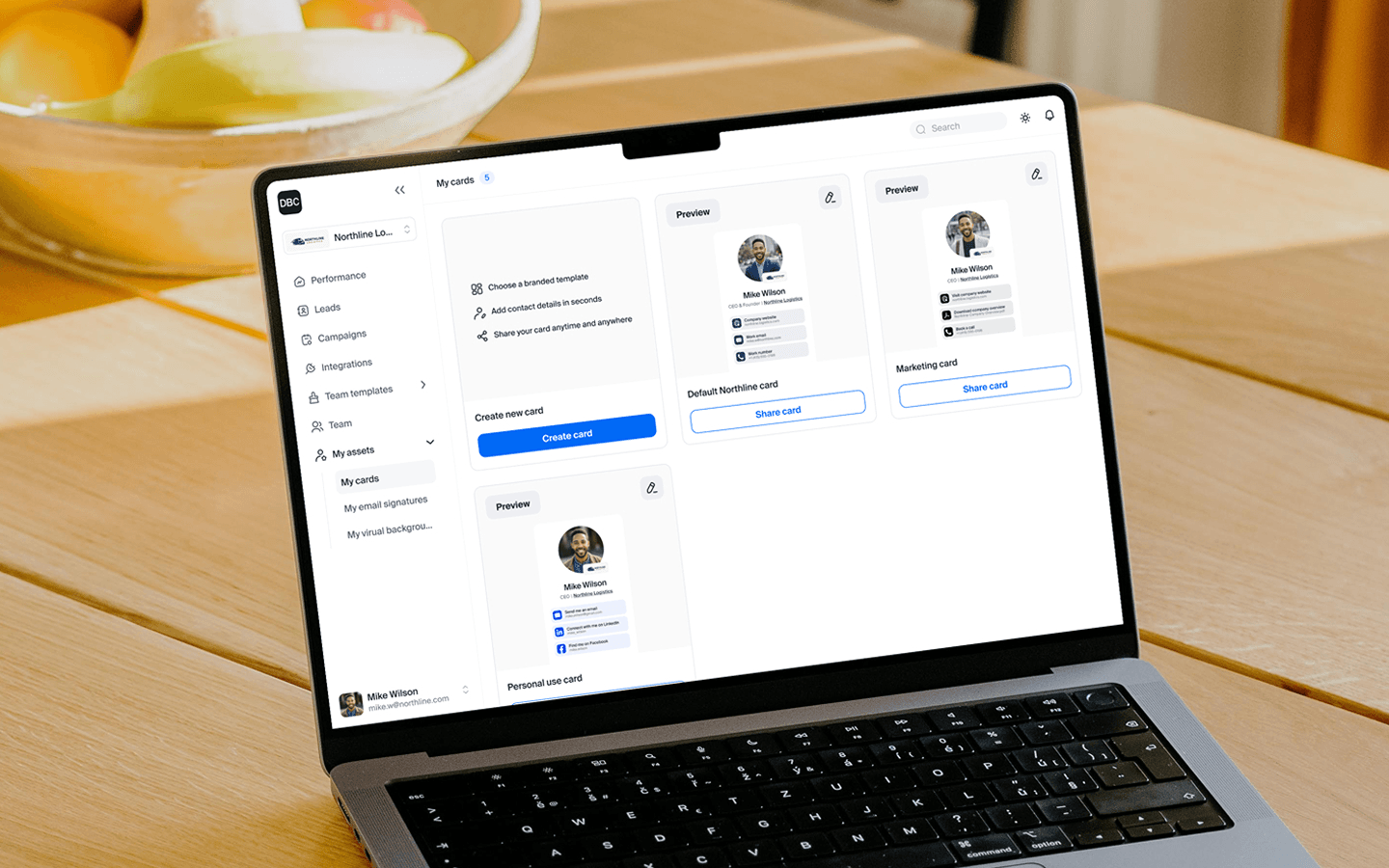
Built DBC as a single, coherent system that unifies digital business cards, email signatures, and branded assets across the company.
Aligned the product with the needs of marketing, sales, and HR to support lead attribution, brand governance, and employee management in one platform.
Integrated lead capture and analytics to connect networking activity with sales pipeline performance.
Enabled seamless CRM exports and integrations, allowing companies to adopt DBC without changing existing sales processes.
User Experience
Designed role-based experiences with progressive disclosure, giving everyday users simplicity while preserving power for admins and managers.
Standardized core interaction patterns (tables, filters, bulk actions) across features to reduce cognitive load and speed up onboarding.
Structured dashboards to surface high-level KPIs first, with paths to drill down into leads, campaigns, and team data.
Used instructional empty states and guided actions to help users succeed without external documentation.
User Interface
Established a neutral visual foundation that supports corporate B2B use cases while remaining modern and approachable.
Used restrained color accents and subtle status indicators to maintain clarity in data-heavy views.
Technology
Built the frontend on a component-based architecture to ensure scalability and long-term maintainability.
Used Shadcn/UI as a reliable foundation for accessibility and interaction states, extending it with custom components where needed.
Ensured consistent behavior across complex enterprise features such as analytics, lead management, and team structures.
Delivered a flexible technical foundation capable of supporting multiple integrations and future product expansion.
Implementation Highlights
Performance Dashboard
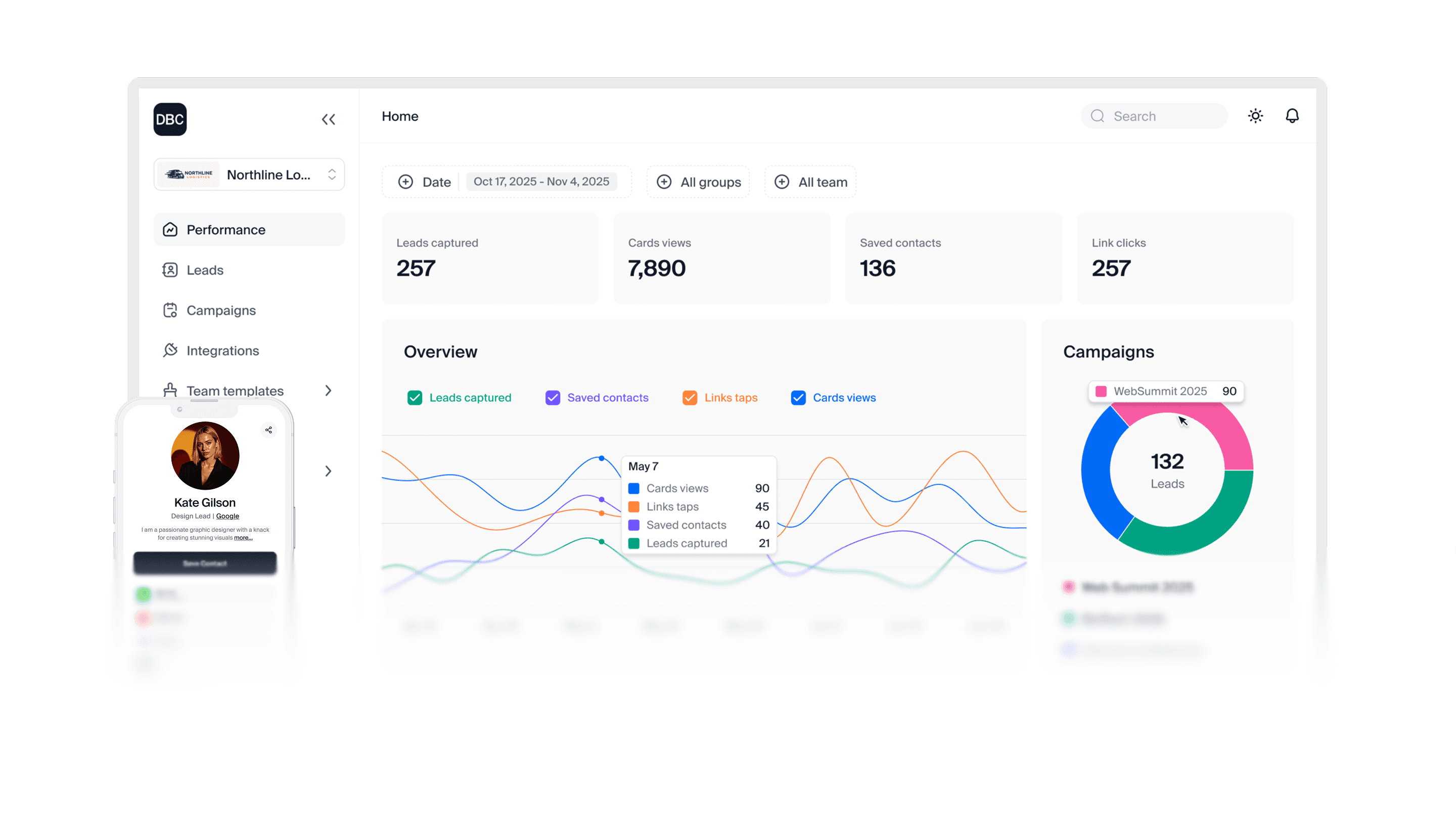
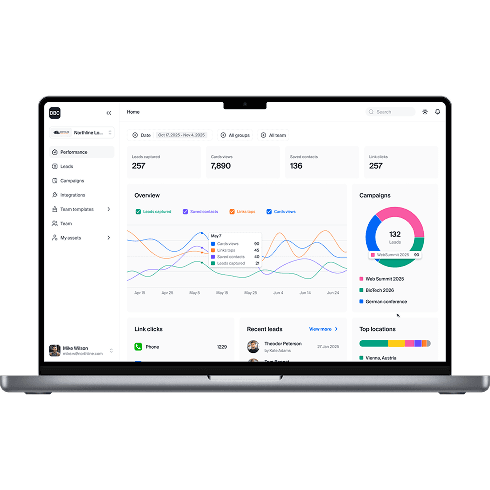
We designed the Performance home screen as a single place where marketing and sales teams see how every digital business card contributes to pipeline: leads captured, card views, link clicks, and saved contacts over time.
A key challenge here was showing rich analytics without overwhelming users who often open the dashboard on the way between meetings.
Leads Table
The Leads screen displays all contacts captured via DBC in a table layout, allowing teams to quickly scan names, roles, owners, tags, and dates. Users can easily search by name, title, or email, and export or manually add new leads when needed.
A key challenge was giving DBC enough "lead management power" without turning it into a full CRM.

Teams Templates
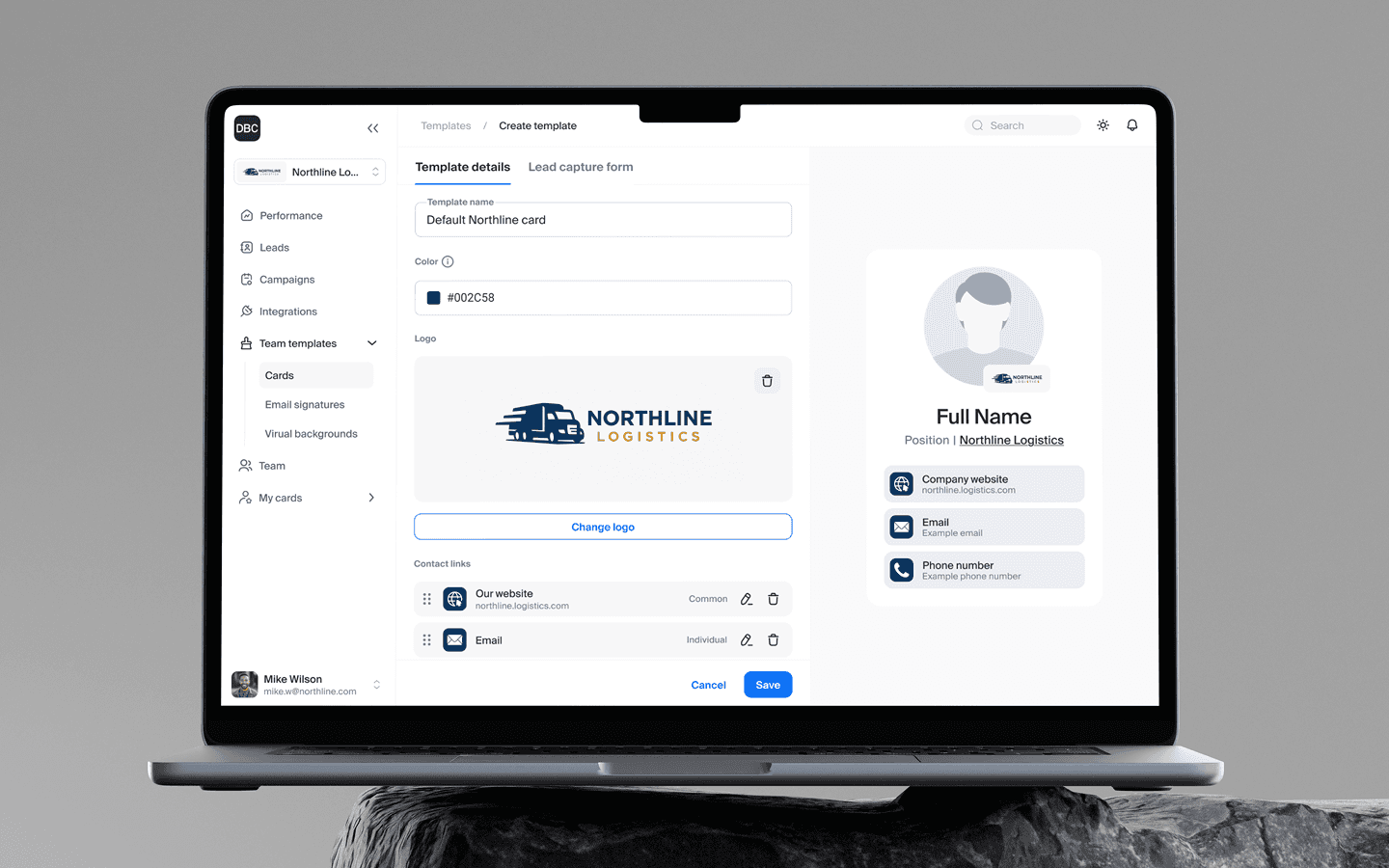
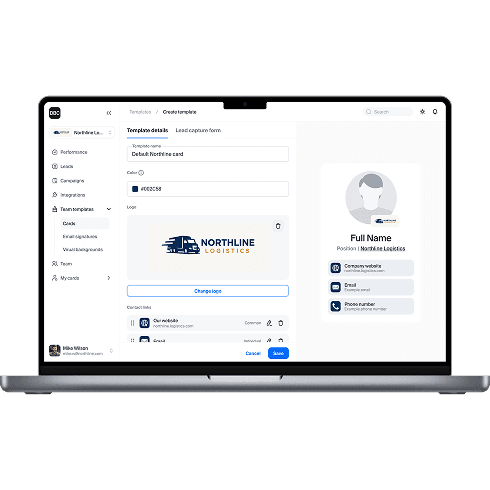
The starting point for every DBC rollout is a team template. Only admins can create and edit it, which lets the company fully control the card's branding and overall structure.
Links can be marked as Common or Individual, which keeps the experience consistent without blocking personalisation.
Let's work together
Let's create an interface that will outshine competitors and delight your clients. We will contact you within one business day to discuss the project and create a proposal based on your needs, budget, and timeline.