Healthcare

A frontend-first team that modernizes legacy applications for enterprise and SaaS companies: frontend audit, modernization roadmap, AngularJS to Angular and Angular or jQuery to React migrations, UI and design-system modernization, delivered module by module while the product stays live. 100+ SaaS products delivered, 5.0/5 on Clutch, a proposal within 3-5 business days and a kick-off in 2-4 weeks.


The order matters: the audit decides what to rewrite and what to refactor, the roadmap decides in which order, and every module ships on its own while the legacy product keeps running.
Every engagement starts with a frontend audit of the legacy application: framework and dependency versions, a module map of the UI, how tightly it is coupled to the backend, test coverage, performance and accessibility baselines, and who still holds the knowledge. You get a written report that names the risky modules and the quick wins, with a rewrite-or-refactor call for each module.
What you get: Audit report, module map, rewrite-vs-refactor decision per module.
The audit becomes an application modernization roadmap: modules ordered by business value and risk, a release plan per module, team roles, and a budget tied to deliverables rather than to teams. It follows the template from our application modernization strategy guide and is the document your CTO signs off before any code changes. Stakeholder alignment is where most programmes stall, so we plan for the non-technical challenges as well.
What you get: Phased plan with milestones, owners and a release order.
The core of the work. AngularJS to Angular migration for enterprise products that stay on the Angular line, Angular to React and jQuery to React through our React migration services, and a design system so the modernized screens look and behave like one product. Legacy workflows are reworked with real users rather than copied pixel for pixel.
What you get: Modernized modules in Angular, React or Next.js with a component library and tests.
We never schedule a big-bang cutover. The legacy and the modernized UI run side by side behind one shell and one router (the strangler pattern), each module ships to production on its own, feature flags allow a rollback per screen, and parallel runs on real data catch regressions before users do. Your product stays live and your release calendar stays yours.
What you get: Module-by-module releases; no maintenance window, no frozen roadmap.
Documentation, tests and the design system are part of the delivery, so your team can own the modernized product without us. Pick the model that fits: a fixed-scope project we deliver end to end, a dedicated modernization team you steer, or senior React and Angular developers who join your squad for the migration quarters.
What you get: A product your engineers maintain, with the team model you chose.
Six workstreams a legacy frontend usually needs. The first three are the core of every engagement; the rest are pulled in when the audit says so.

AngularJS, jQuery and early Angular frontends moved to Angular, React or Next.js in TypeScript, module by module, with the product live throughout. Routing, state management and the build pipeline are rebuilt on the way.

Workflows rethought with the people who use them, a component library with tokens and states, and screens rebuilt so the product finally looks like one product. See how the leading UI modernization companies approach it.

When the framework is still supported, we restructure the code in place: typed modules, predictable state, test coverage and modern tooling, with no change in behaviour for users. Our frontend refactoring cost formula shows what drives the effort.

Bundle budgets, lazy loading, rendering strategy, caching and prefetching. Legacy dashboards that take seconds to open are the usual starting point. For a live product with a red field report, start with Core Web Vitals optimization.

WCAG 2.2 AA built into the modernized components rather than retrofitted: semantic markup, keyboard paths, focus management and screen-reader testing. Required for healthcare, public-sector and EU-facing products.

The frontend is what we are hired for. When the project needs it, we also handle the API layer, authentication and third-party integrations, or add an adapter layer so a modern UI can work against legacy services until they are replaced.
Two products modernized without stopping the business, both published as case studies.
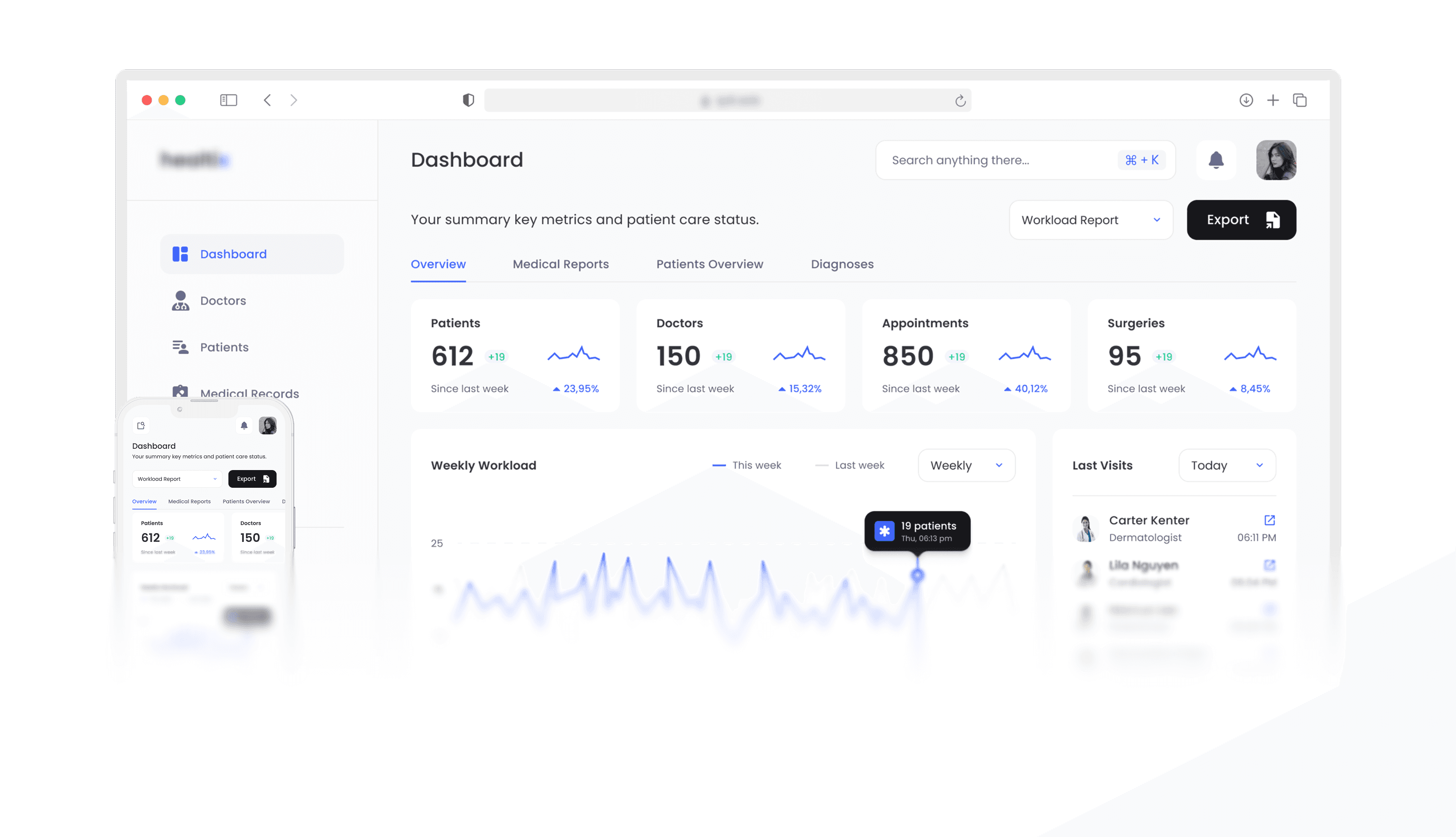
A US HealthTech company (11-50 employees) ran a doctor-facing platform with an outdated interface, no unified design system and slow access to patient data during appointments. The in-house team had no frontend capacity to scale it across growing facilities.
We rebuilt the main dashboard as a card-based layout that surfaces patient details, recent activity, medications and upcoming appointments at a glance, built a modular design system for the whole product, and added caching and prefetching so patient data is available instantly. Appointment management with advanced filters and a custom scheduling panel for doctors followed on the same system.
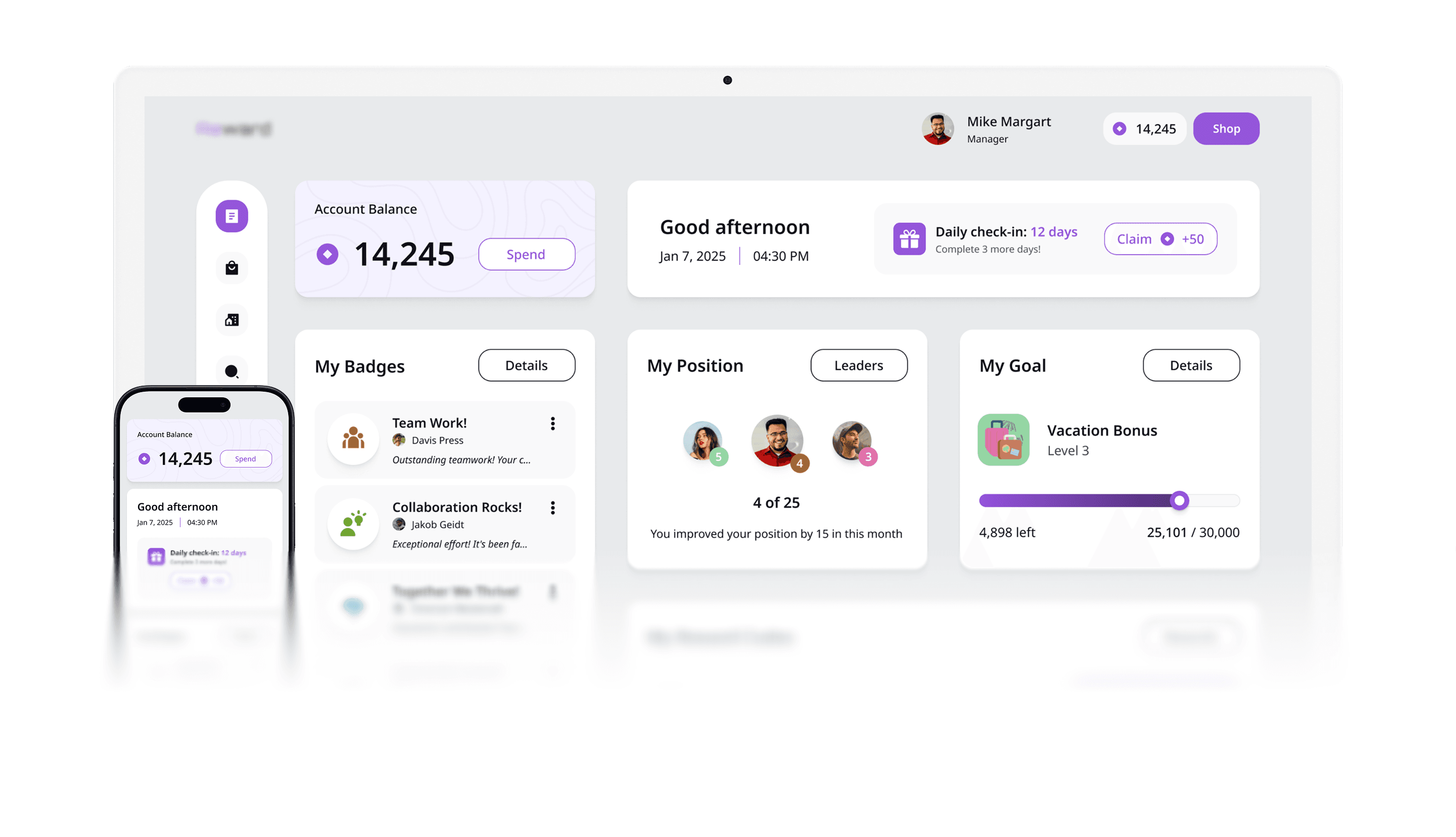
A US rewards-and-incentives SaaS (11-50 employees) had an outdated UI, a separate mobile version because the product was not responsive, growing technical debt, and a backend that could not yet support a modern frontend framework.
We redesigned the dashboard and onboarding, simplified navigation, and built a reusable component library with configurable branding for white-label clients. Because of the backend constraints, the frontend was rebuilt on HTML, CSS and Bootstrap 5.3 with CSS-variable theming, structured so the move to a modern framework is cheap once the backend allows it. One responsive codebase replaced two.
Enterprise and SaaS teams hire us when a legacy frontend has become the bottleneck: an AngularJS or jQuery product that must keep running while it is migrated, a healthcare or finance platform that needs a design system and accessibility before the next audit, or an in-house team that cannot staff a migration next to the feature roadmap. Most engagements start with a CTO or VP Engineering, a live product with paying users, and a backlog the legacy code keeps blocking.
A 30-minute call with our founder or COO: your product, where the frontend hurts today, team setup, timeline. No slides, no sales script.
Scope, architecture notes, team composition and a phased plan with milestones. You see what gets built, in which order, and by whom.
Paperwork, access and onboarding happen in parallel, so the team starts on sprint one with the plan already agreed.
We own the frontend modernization end to end: architecture, UI, testing, release. Fixed scope, phased milestones, one accountable team.
A stable squad of senior front-end engineers (plus design and QA when needed) embedded in your product organisation. You steer the backlog, we run delivery.
Individual vetted front-end developers join your existing team, your process and your tools, with an interview before they start. See how hiring React developers works
Our team uses a modern, focused tech stack — combining industry-leading frameworks with AI-powered development tools to deliver fast, scalable, and maintainable frontends.


We have modernized legacy applications for companies running 10-20 year old systems, turning outdated frontends into modern, high-performing products. Our 5.0/5 Clutch rating and 100+ delivered products show that modernization does not have to be painful.
Average Referral Rating

5.0


Clutch, Spring Award 2025 Global
Clutch 1000 2025

Clutch, Spring Award 2024 Global

Clutch, Top Angular Developers 2024

Clutch, Top Developers 2024

Best Web Development 2023

Clutch, Fall Champion 2023 Global

Clutch 1000 2023
Clutch, Top Company 2022

Business of the year 2022
David Grimm
CTO, Knots
The Frontend Company quickly provided top talent who became key to our team. Reliable, responsive, and a pleasure to work with!


CEO at Straddle
Their speed and professionalism are really impressive


CTO at Social Curator
I appreciated the level of comfort TFC made us feel. It was like being a part of a family.

Director & Product Engineering, SkillDirectory
They are young, talented, and extremely smart developers.

CEO & Co-Founder at Asio AS
Their flexibility and genuine interest in finding the best solution for the product was impressive.

Principal Consultant, Roost Digital
They were proactive and seemed eager to build a relationship.

CEO, Xpertify
The different and very profound skillset of the TFC team was very impressive.

CEO, SECTOR 31 s.r.o.y
Their responsiveness and accuracy were impressive. We highly recommend them

Co-Founder, parloo.de
There are a lot of companies that offer similar services but we’ve had an end-to-end good experience with them.

CTO, Quik
TFC has the ability to dive in and get the work done creatively with a lot of personal input.
David Grimm
CTO, Knots
The Frontend Company quickly provided top talent who became key to our team. Reliable, responsive, and a pleasure to work with!
Max Limper
CEO @ DGG, Creators of RapidPipeline
Professional, communicative, and efficient team. They connected our headless CMS to a fast static site. Highly recommended!
CEO & Co-Founder at Asio AS
Their flexibility and genuine interest in finding the best solution for the product was impressive.
CEO at Straddle
Their speed and professionalism are really impressive
CTO, Quik
TFC has the ability to dive in and get the work done creatively with a lot of personal input.
Director & Product Engineering, SkillDirectory
They are young, talented, and extremely smart developers.
Principal Consultant, Roost Digital
They were proactive and seemed eager to build a relationship.
CEO, Xpertify
The different and very profound skillset of the TFC team was very impressive.
CEO, SECTOR 31 s.r.o.y
Their responsiveness and accuracy were impressive. We highly recommend them
Co-Founder, parloo.de
There are a lot of companies that offer similar services but we’ve had an end-to-end good experience with them.
CTO at Social Curator
I appreciated the level of comfort TFC made us feel. It was like being a part of a family.
Let's create an interface that will outshine competitors and delight your clients. We will contact you within one business day to discuss the project and create a proposal based on your needs, budget, and timeline.