Angular, legacy migration

Our Angular development services put senior Angular engineers on your product: new features, a live Angular app maintained and kept current, and AngularJS modules moved to modern Angular while your product keeps shipping.






Both projects below were built in Angular. The results are the ones published on each case page.
Legacy app to a modern Angular SPA · production beta within three months · more than 80% of the legacy bug backlog eliminated

Angular frontend on a PHP backend: photo delivery, client access and billing in one platform, built for large image uploads
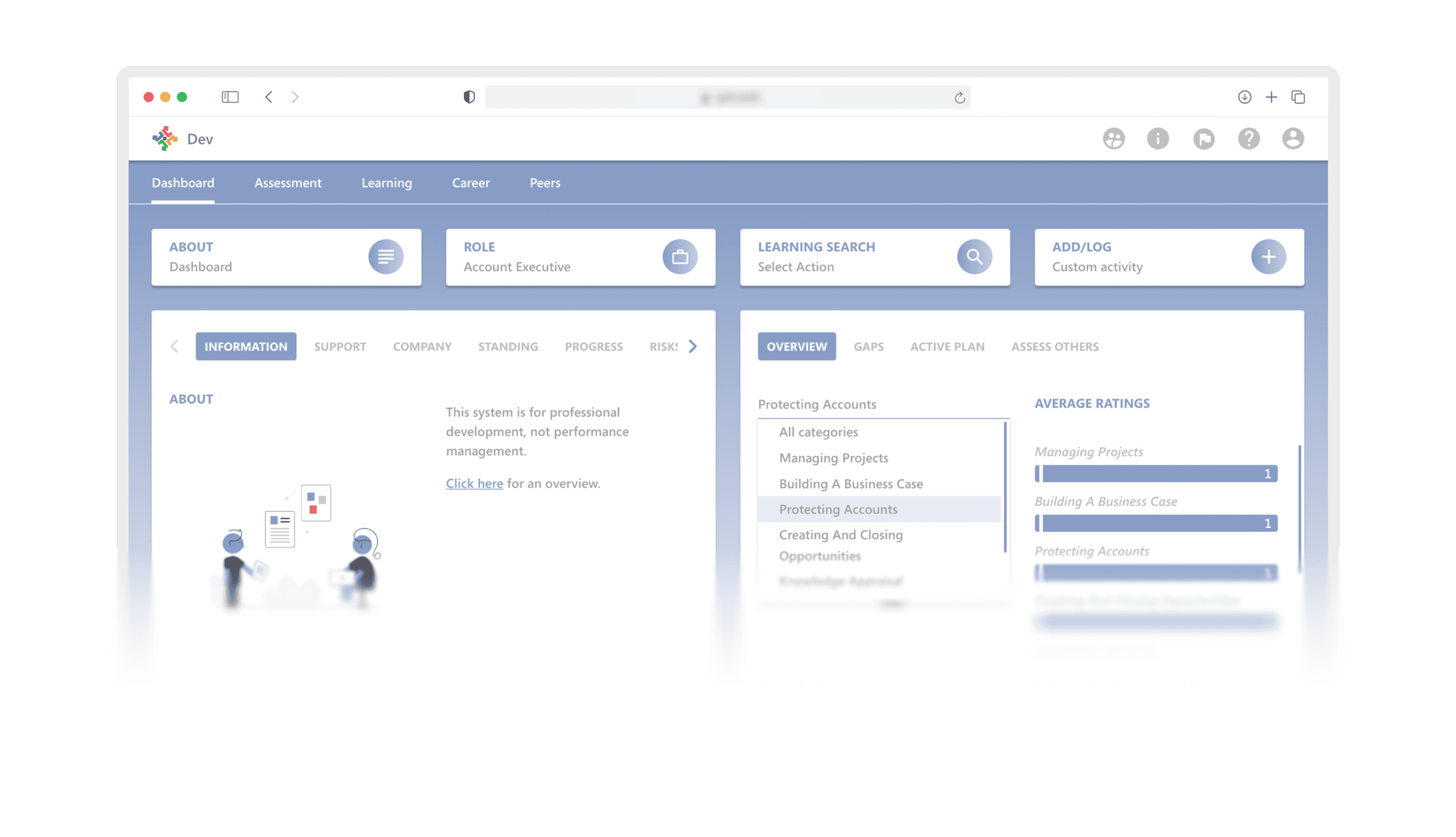
Challenge. A US enterprise learning platform had to move from a legacy architecture to a modern Angular single-page app on a very tight timeline, while keeping its commitments to enterprise customers such as LinkedIn, Honeywell, General Electric and PPG.
Result. The alpha shipped on schedule and a production beta followed within three months. All existing customers moved to the new platform in a controlled way, the key enterprise customers stayed, and more than 80% of the legacy bug backlog was eliminated.
Read the SkillDirector case“They are young, talented, and extremely smart developers. I was in urgent need of front end work and landed on them.”
More delivery work, Angular and React: all case studies
Our Angular development services cover new builds, ongoing work on live apps and moves off AngularJS, for SaaS products and enterprise Angular applications such as SkillDirector’s learning platform, used by companies like LinkedIn and Honeywell.

New products and new features built with current Angular, clean architecture and patterns that scale. We take care of planning, UI, testing and release, so your product is modern, fast and ready to grow.
Whether it is a SaaS platform, an internal tool or a customer portal, we lay down a solid frontend foundation, so you won't need to rebuild it six months later.

We move legacy AngularJS apps to modern Angular one module at a time, so your team keeps working while the frontend is rebuilt behind it. The method is in our AngularJS to Angular migration guide; for a whole AngularJS app, see AngularJS migration to React or modern Angular.
We also upgrade older Angular versions to current releases, one major version at a time.

Continuous improvements, bug fixes, dependency updates and performance work for a live Angular product, so it stays out of tech-debt territory while you grow the business.
You focus on the business; we make sure the frontend never gets in the way.
Need upgrade planning, an architecture review or a second opinion before you add a team? See Angular consulting
About 40% of our engineers work in Angular day to day, and Alex Vasylenko, our founder, has worked with Angular since its first versions. This is what we build with today, and when we pick each tool.
New work starts on current Angular (v22, released June 2026; a new major every 12 months). Live apps are kept on a supported version: v21 and v20 are in long-term support, v20 only until 28 November 2026, and v2 to v19 get no more fixes. We upgrade one major version at a time.
Standalone APIs instead of NgModules, signals for component state, OnPush change detection everywhere, and zoneless mode where the app and its libraries allow it. On an older codebase this is also the upgrade path we follow, module by module.
RxJS for streams and HTTP. NgRx (store or SignalStore) when state is shared across many screens, as on the SkillDirector platform; signals and plain services when it is not, so a small app does not carry a store it never needed.
Angular SSR with hydration for public pages that need fast first paint and indexing; a plain single-page app for products behind a login. The decision is made per route, not per project.
Angular Material and the CDK for standard apps; a custom design system on Kendo UI when the product already has one (SkillDirector); Tailwind CSS where your team prefers utility classes. Accessibility checks on every component.
Nx for monorepos and shared libraries, ESLint and Prettier, Jest or Vitest for unit tests, Playwright for end-to-end flows, Storybook for the component library, and CI on every pull request. Documented so your team can take over.
Bring the one that hurts most to the call.
Get my Angular estimateYour product, your stack, what needs to change and by when. No slides, no sales script.
After the NDA we review what you can share: the code, the designs, the backlog. We ask questions where something is unclear instead of guessing.
Scope, team, timeline and price, within 3–5 business days of our first call. It is yours to keep, whether or not you go ahead.
Everything up to the estimate is free. If your project needs a full Discovery phase (workshops, architecture, a detailed backlog), that is a separate, paid phase: the estimate says so, with its own scope and price, and you decide whether to start it.
Get my Angular estimateArchitecture, UI, testing and release, with phased milestones and one accountable team. Each phase is scoped and priced in writing before work on it starts.
A stable squad of senior Angular engineers, plus design and QA when needed, inside your product organization. You steer the backlog, we run delivery.
Once you go ahead, the work runs in four stages. The team starts on average 2 weeks after sign-off, sometimes 2–4 weeks, with paperwork, access and onboarding done in parallel.
You get: a team working in your repositories, under your review rules.
You get: features in production sprint by sprint, with a demo each sprint.
You get: a test suite that grows with the code, not after it.
You get: an Angular app that stays on a supported version.
We use AI tools where they save you time and keep them away from the decisions. Before a refactoring they map module boundaries and component dependencies, so the plan rests on the real code. During the work they draft unit tests for the code we touch and do repetitive changes, such as moving components to standalone APIs or replacing deprecated syntax across the app. Every change is still a pull request that an engineer reads, runs and answers for, in your repositories and under your review rules. You get the speed without code nobody understands.
“Their flexibility and genuine interest in finding the best solution for the product was impressive.”

Steinar Aas
CEO & Co-Founder at Asio AS
“I appreciated the level of comfort [TFC] made us feel. It was like being a part of a family.”

Jacob Berg
CTO at Social Curator
“[TFC] has the ability to dive in and get the work done creatively with a lot of personal input.”

Bartek Czerwinski
CTO at Quik