
B2B PRODUCT PLATFORM
About Client
The client is a U.S.-based company specializing in B2B and B2C platforms for computer parts. They provide a seamless digital sales channel for manufacturers while allowing for unique brand identities. Their focus is on catering to both wholesale partners and individual consumers, offering customized build options to meet diverse needs.
Main Goal
The primary goal was to create a scalable multi-brand B2B platform that could support multiple manufacturers on a single technical and UX foundation.
Success was defined by the ability to onboard new brands quickly while maintaining a consistent and predictable user experience.
Another key objective was to improve the efficiency of wholesale purchasing workflows and configurator flow.
The platform needed to reduce friction in ordering, delivery planning, and post-purchase management while supporting complex real-world business logic.
Project Requirements
Business
Wholesale partners needed to purchase products from multiple brands within a single order. Existing solutions often forced users to split orders, increasing operational friction.
Manufacturers required visibility into performance metrics such as sales volume, conversion rates, etc. The platform needed to support better decision-making without external tools.
User Experience
B2B users interacted with the platform frequently and under time pressure, often placing large or repeat orders. Any inconsistency or unnecessary complexity directly impacted efficiency and trust.
The platform also had to present large volumes of data—products, variants, inventory, delivery states, and analytics—without overwhelming users. Simple structure and predictable interaction patterns were critical.
User Interface
Each brand required a distinct visual identity while sharing the same underlying interface logic. The challenge was to support strong branding without fragmenting the user experience.
Data-heavy views such as analytics dashboards and inventory tables needed to remain readable and actionable across different screen sizes and user roles.
Technical
The system had to support rapid brand onboarding without duplicating components or business logic. Long-term maintainability and scalability were essential to the product's viability.
Complex scenarios such as mixed-brand carts, staggered product availability, and flexible delivery scheduling needed to be handled reliably and transparently.
Project Structure
Our Solutions
Product Architecture
The introduction of mixed-brand carts aligned the platform with real distributor behavior and removed unnecessary purchasing friction. This change improved order efficiency and reduced operational overhead.
Recommended product bundles increased average order value and simplified decision-making for buyers. Integrated analytics dashboards provided immediate access to key performance metrics, reducing reliance on external reporting.
User Experience
We designed unified, repeatable user flows shared across all brands, allowing users to build familiarity and work faster regardless of brand context. This significantly reduced cognitive load and onboarding time for repeat users.
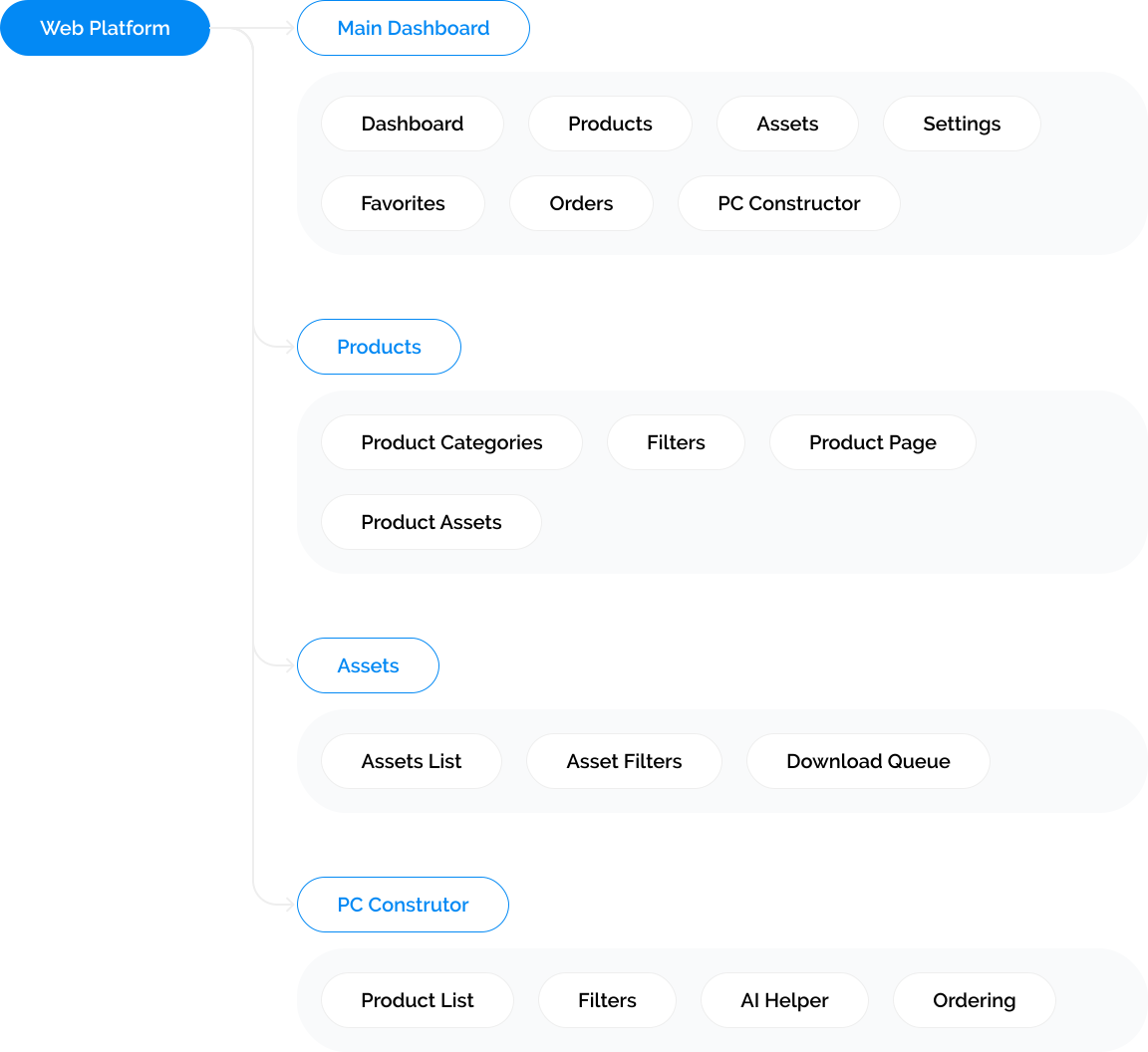
The platform was reorganized into clearly defined functional areas, improving navigation clarity and task completion speed. Users could easily move between catalog browsing, ordering, analytics, and order tracking without losing context.
User Interface
A configurable design system was introduced, separating brand identity from interaction logic. This enabled strong visual differentiation while preserving usability and consistency.
Improved layout structure, typography, and spacing made complex screens easier to scan and interpret. As a result, users could work with dense data sets more confidently and with fewer errors.
Technology
A theming system enabled fast and cost-effective brand onboarding without affecting core functionality. This dramatically reduced development time and ongoing maintenance costs.
Flexible delivery logic improved transparency around availability and shipping timelines. Users gained clearer expectations, which reduced confusion and support requests.
Implementation Highlights
Smart PC Configuration, Guided by AI
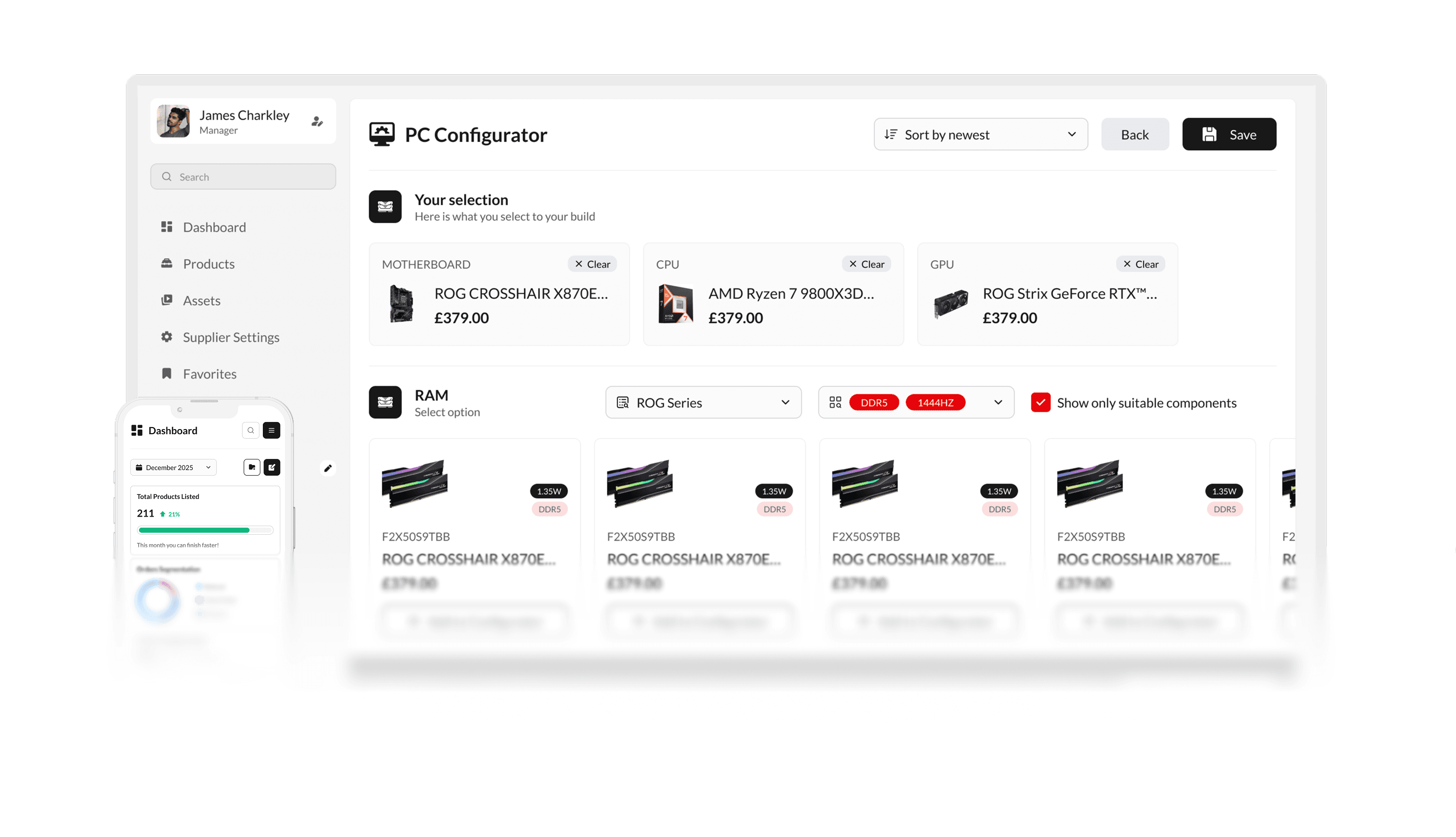
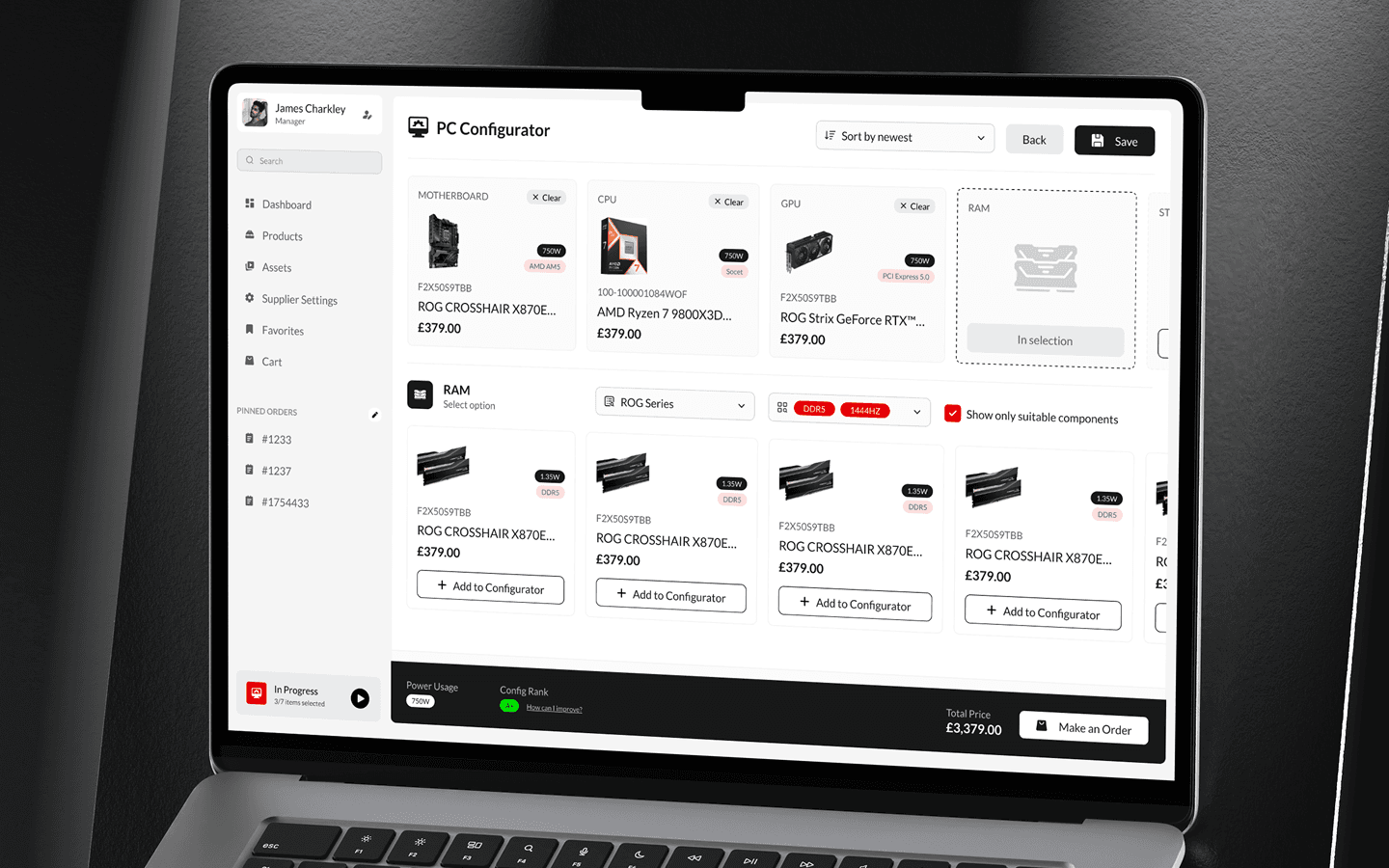
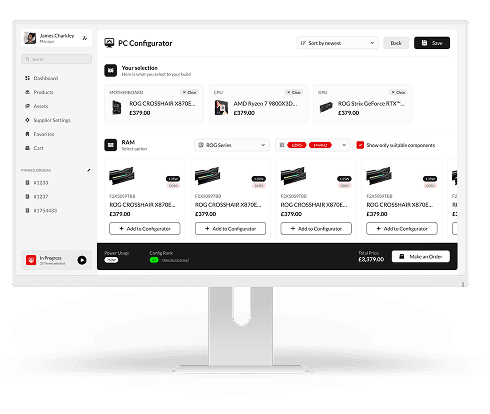
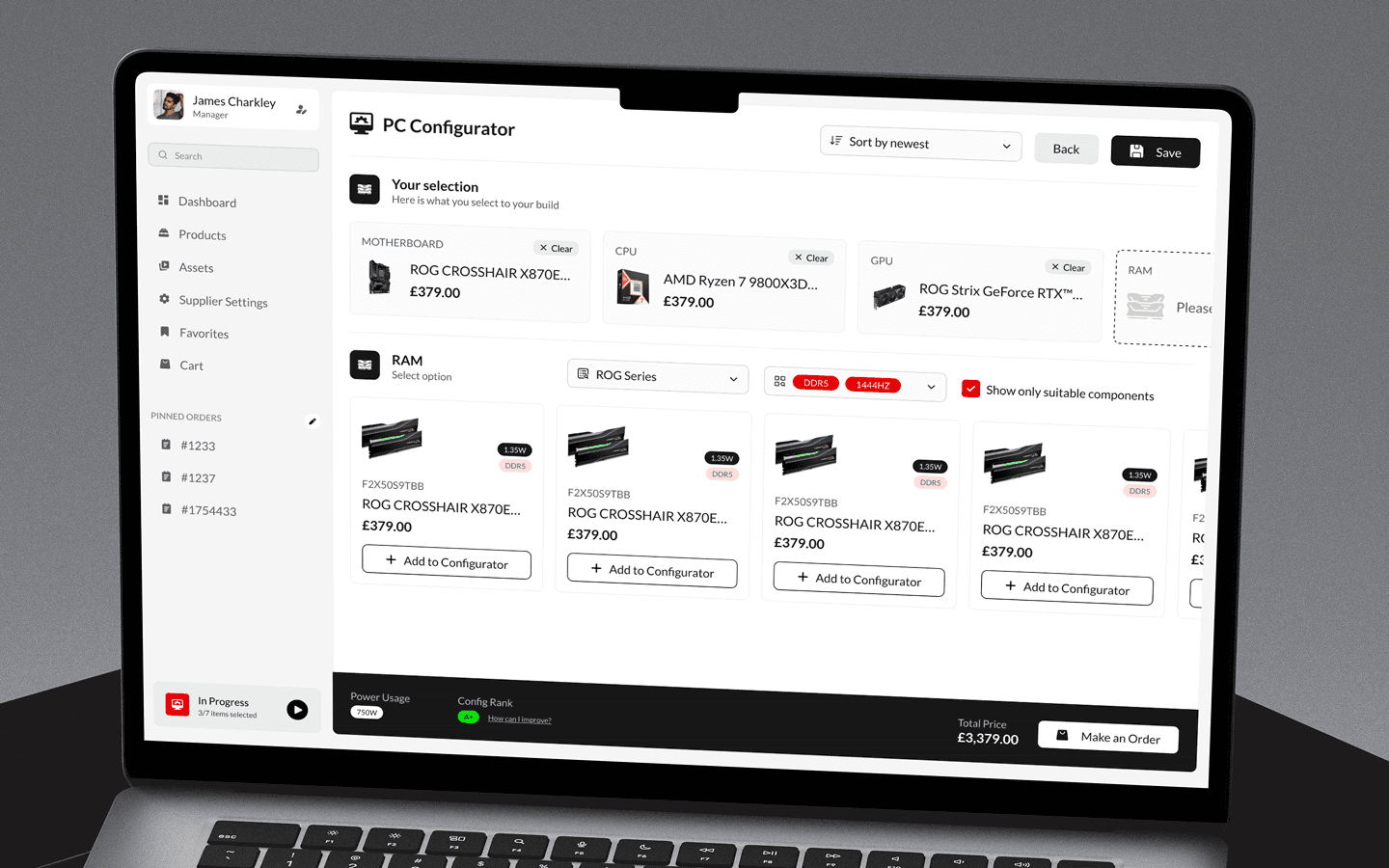
Using the Configurator, users can assemble a custom PC build while monitoring key parameters such as power consumption, dimensions, and performance in real time.
When needed, the built-in AI Assistant recommends optimizations tailored to each customer's requirements, and every configuration is validated and tested by specialists after the order is placed.
Unified Product Experience & Commerce Management
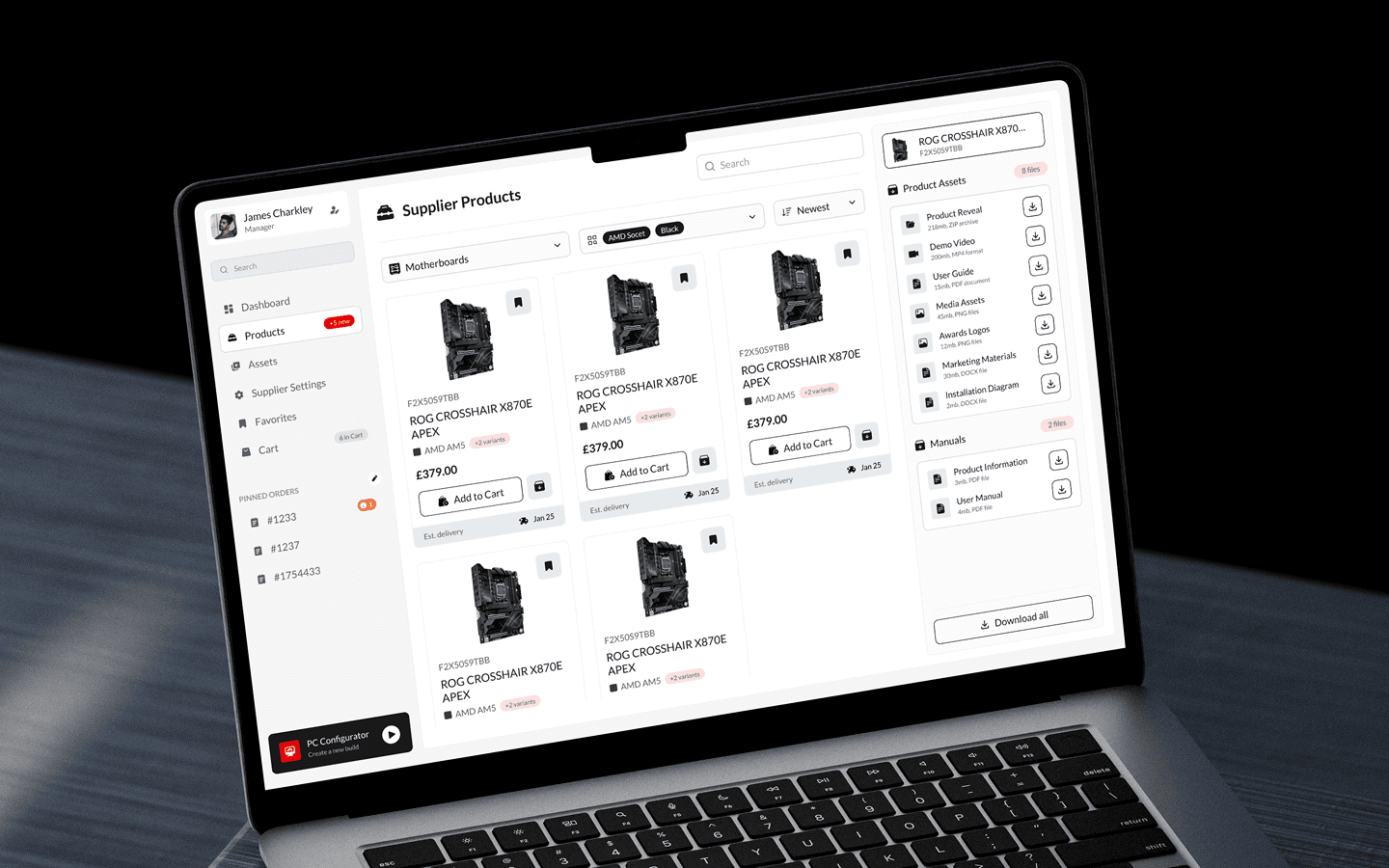
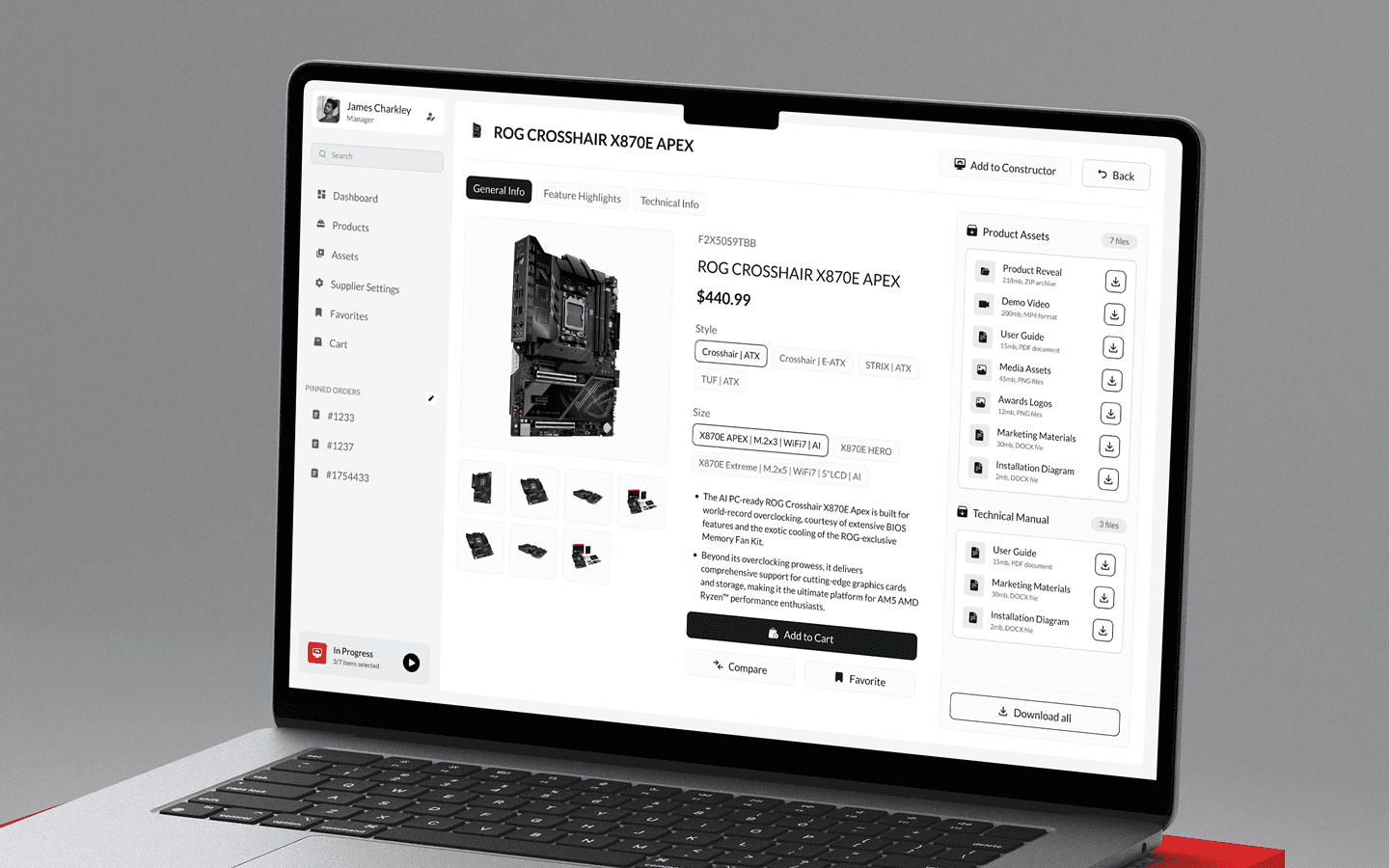
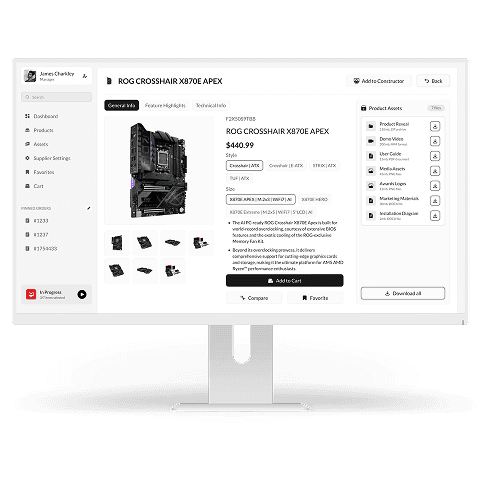
Users work with advanced product pages that support variations, downloadable documentation, and intelligently recommended bundles, all connected to a centralized asset library.
The platform enables mixed-brand ordering, real-time order tracking, and inventory visibility, while built-in analytics provide actionable insights across the entire commerce workflow.
Smart Dashboard for Sales, Inventory & Insights
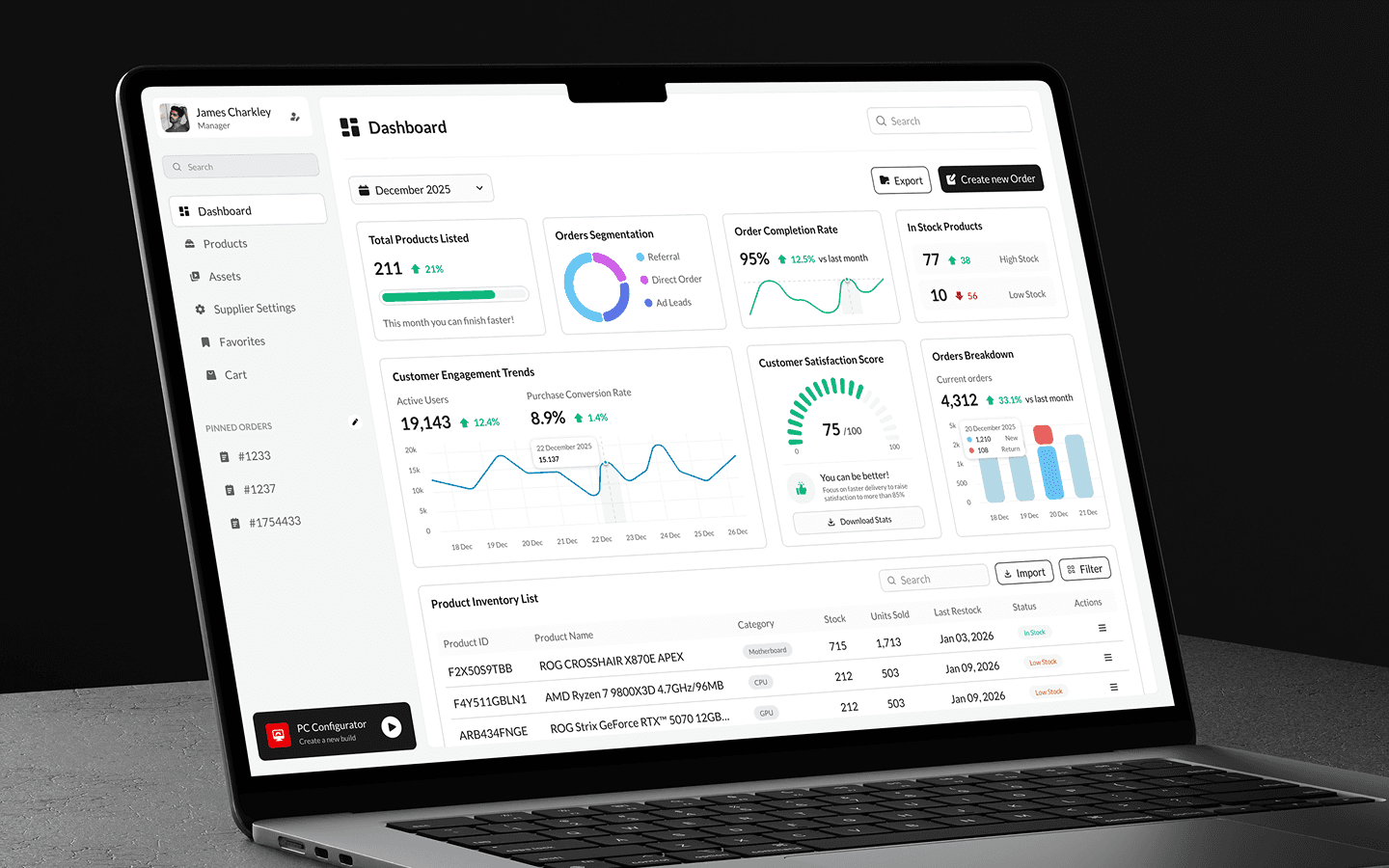
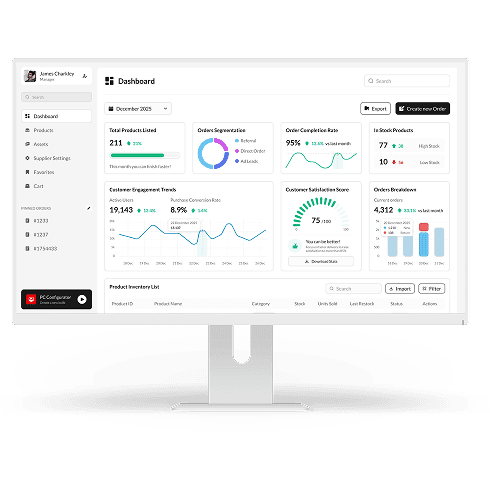
The Dashboard consolidates key sales metrics, warehouse inventory levels, and the most popular PC configurations into a clear, easy-to-scan view.
Based on this data, the built-in assistant highlights priority areas and opportunities to improve customer engagement and satisfaction—making day-to-day decision-making faster and more effective.
Let's work together
Let's create an interface that will outshine competitors and delight your clients. We will contact you within 24 hours to discuss the project and create a proposal based on your needs, budget, and timeline.